Why are Multionational Firms Eager to Buy Green Power in China

China`s nascent green electricity trading scheme has attracted keen interest from multinational companies seeking to offset their carbon footprints in the country. But supply has been limited in a partially reformed market that is still heavily reliant on state guided power distribution. Also making it challenging for buyers and sellers to agree to deals especially long term ones is volatile global energy supply and prices amid heightened geopolitical uncertainties sparked by Russia`s invasion of Ukraine. Green power demand is strong in China as more companies hear that green power purchase agreements are now possible and available, said David Fishman, a Shanghai based senior manager at energy consultancy The Lantau Group, which helps large power users secure green energy supply. The prices and volumes of bilateral deals done through the scheme administered by the staterun green power exchanges in Guangzhou and Beijing are not made public. In the past 12 months, German chemicals giant BASF has clinched three power agreements under the scheme for its US$10 billion wholly owned petrochemical complex in Zhanjiang, western Guangdong province. These are key for BASF to achieve its plan for the facilities to be completely powered by green energy. Plants at the site, its third largest production base globally, will gradually come on line between late this year and 2030. The deals will also help the company reach its ambition to become carbon neutral by 2050, and contribute toward China`s goals of peak emissions by 2030 and carbon neutrality by 2060. A deal with China Resources Power a year ago was billed by BASF as a landmark initiative to open up a new green energy business model, as it was the first company to buy renewable energy under the scheme. It was followed by a 25 year framework agreement in March with State Power Investment Corp for the supply of onshore wind and solar power, and a 25 year supply contract last month with Brookfield Renewable. The Canadian firm, part of Brookfield Asset Management, will build dedicated solar and wind farms as well as energy storage facilities to support BASF`s Zhanjiang complex. It was an unprecedented longterm, fixed price deal in China that allows the consumer to decarbonise in a measurable, auditable and reportable manner, said Daniel Cheng, Brookfield`s renewable power and transition managing director. Brookfield entered China`s renewable energy market in 2017 with the acquisition of 168 megawatts of generating assets. Its China asset portfolio has since grown to 4,200MW. Still, many green power project owners have elected to sell their output to the state owned grid operators, instead of going to the trouble and cost of registering in the open markets under the scheme, Fishman said. Public market prices are high, but extra work isn’t worth the extra work  for many generators, he added, adding that it doesn’t need to be sold in the open market until 2030. In March, BASF rival Covestro’s Chinese boss Holly Ray Fanli said  the company wanted to buy more green electricity through long-term contracts, but its supply was limited. We were able to purchase a premium enough to meet 10% of the annual demand at our Shanghai plant, the world’s largest manufacturing facility. According to Fishman, long-term bilateral green power trading pricing is currently priced given the rising costs of solar systems due to material shortages and rising fossil fuel prices during the Ukrainian War. extremely difficult.

, , ,

Why are Multionational Firms Eager to Buy Green Power in China Read Post »
Green energy in EU-China relations

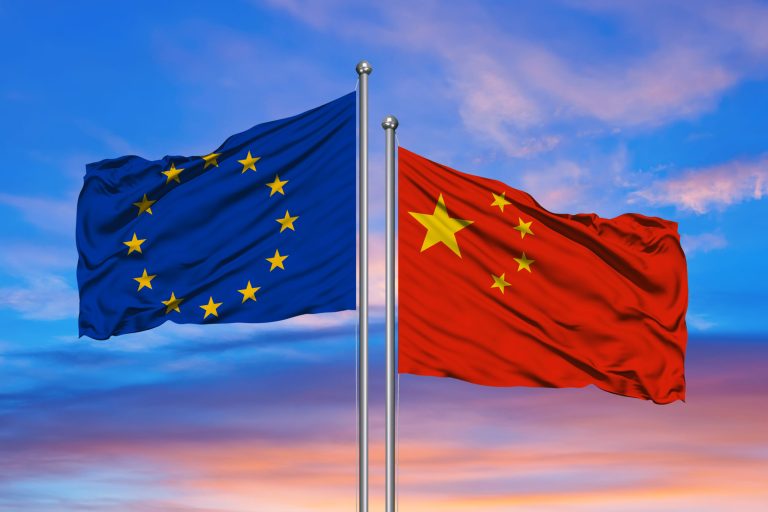
Renewable energy has geopolitical consequences that go beyond the immediate impact on energy and commodity markets. Individual countries’ energy strategies have a variety of economic and political ramifications. This article examines the importance of renewable energy in EU-China relations, as two of the world’s largest renewable energy producers. Both countries’ individual objectives for decarbonization of their domestic energy systems have lately risen, and renewables are playing an increasingly crucial role in shaping their bilateral relations. As a result, we wonder what impact renewable energy has on the connection between the two parties. We use the concept of policy interdependence to capture the effect in four sectors relevant to renewable energy: climate, energy, industry, and trade and investment policy. While these are frequently thought of as independent fields, they are all connected by renewable energy. Renewable energy has the potential to be a factor of bilateral ties, according to the findings. In the past, renewable energy helped the EU and China align more closely, but today’s increased reliance on policy choices based on national goals raises barriers to further cooperation. However, the patterns of policy interdependence shown in this study point to the possibility of renewed cooperation in the sphere of energy policy, assuming policymakers’ ability to see beyond the current structure of bilateral ties. The case of renewable energy in EU-China ties demonstrates that renewables are becoming an increasingly important and powerful influencer of bilateral relations’ nature. Because of the technological differences between renewables and fossil fuels, many classic geopolitical factors may not apply in RE geopolitics. However, policy interdependence between the EU and China in the sphere of renewable energy demonstrates that renewables co-determine bilateral interactions beyond the immediate energy and material flows between individual countries. As the instance of the EU and China demonstrates, RE policies interact, resulting in more alignment and proximity on the one hand, as well as increased competitiveness and frictions on the other. As a result, the advancement of RE has the potential to “de-geopolitize” international relations, allowing states to move beyond “zero-sum” thinking in their pursuit of energy security. However, RE is not immune to worldwide competition, as seen by the growing struggle over the establishment of industrial standards in RE, as well as trade and investment.

, , , ,

Green energy in EU-China relations Read Post »

China-Taiwan-USA Triangle Holds the Key to War and Peace in Eastern Asia

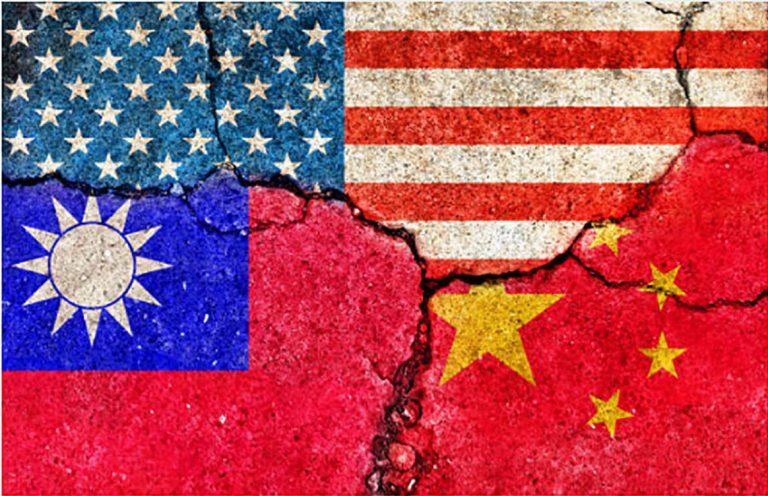
Tensions between Beijing and Taipei have escalated in recent times to the point that they could provoke a serious conventional, and some analysts believe even nuclear, war between the United States and the People’s Republic of China. The Cold War between Washington and Beijing, although Washington denies it, and Beijing is urging the rest of the world not to accept the logic of the Cold War, for which the ball is being transferred to Washington, has already begun and is felt in almost all strategically important regions. two superpowers collide. How is it at all possible that the question of Greater China’s relationship with a small island of 36,000 square kilometers off the coast of China could be the cause of an apocalyptic conflict such as the China-US war over Taiwan would surely be if it happened. The genesis of the China-Taiwan conflict is more than a century old. Although largely unrecognized by other countries as a state, Taiwan sees itself as an independent nation and its political leaders have vowed to defend Taiwan’s sovereignty from Chinese intentions to annex Taiwan to China, by grace or force. Taiwan, whose official name is the Republic of China (ROC) when it comes to defending against possible Chinese aggression from the United States, expects to protect it. Therefore, any increase in tensions between China and Taiwan causes additional mistrust and animosity and adds fuel to the fire of already strained relations between Washington and Beijing. Taiwan, called Formosa (beauty) by the Portuguese colonizers, is a small island located off the east coast of China. Seventy years ago, Chinese nationalists and anti-communists from the former Republican government withdrew from China to Taiwan after the 1949 Communist victory in the revolution and civil war that followed. Since then, Taiwan has continued to exist in international relations as the Republic of China (RoC). Taiwan is located in the East China Sea, northeast of Hong Kong, north of the Philippines and south of South Korea, and southwest of Japan. Therefore, its position is of special strategic importance because it is located between the Pacific and Southeast Asia. Therefore, the Taiwan issue has serious implications for global relations and concerns the whole of East Asia. After parts of Manchurian units revolted, resulting in the overthrow of the Chinese monarchy ruled by the Qing dynasty, 4,000 years of Chinese monarchist rule ended, and on December 29, 1911, the Republic of China was proclaimed. Its founder is considered to be dr. Sun Yat Sen, founder of the Kuomintang Political Party (KMT). At the head of the ruling party KMT, and the After parts of Manchurian units revolted, resulting in the overthrow of the Chinese monarchy ruled by the Qing dynasty, 4,000 years of Chinese monarchist rule ended, and on December 29, 1911, the Republic of China was proclaimed. Its founder is considered to be dr. Sun Yat Sen, founder of the Kuomintang Political Party (KMT). At the head of the ruling party KMT, and the new republic. Suna was later succeeded by General Chiang Kai-Shek, a well-known military leader who fought against Chinese communists who had previously, at the insistence of the Soviet Union, allied with the KMT in a joint fight against the occupying forces of the Japanese Imperial Army. It was a great civil war on the territory of today’s China, which ended with the triumphant victory of the communists. After suffering defeat, Chiang and his KMT supporters fled to Taiwan where they established their base, established control of the island after clashes with the domicile population, and established a state government in exile whose name is still the Republic of China. On the other hand, since its proclamation in 1949, the People’s Republic of China, led by the Communist Party of China, has insisted that must return to China and seeks to reunite Taiwan with the mainland. The Republic of China – Taiwan, on the other hand, is considered the legitimate government of China. During the first two decades, Taiwan gained a halo of non-communist borders and dams towards China in the context of the Cold War policy. Taiwan (RoC) at the time was the only ‘China’ recognized by the UN as a legitimate member of this world organization until 1971. After China bombed Taiwan-controlled Yinmen, Mazu and Dachen in 1954-55, the US Congress passed a Resolution on Formosa authorizing President Eisenhower to defend the territory of Taiwan (Republic of China). Chinese Prime Minister Zhou En-lai signaled at a non-aligned conference in Bandung, Indonesia, that he wanted to negotiate with the United States, but in 1958, China continued the bombing, provoking the United States to increase support for Taiwan.  The animosity between the United States and China over Taiwan lasted until 1971, when there was a serious turning point in the history of American foreign policy relations with China. However, as part of a policy of reprisals or detente between the US and China in order to counter the global threat and influence of the Soviet Union, relations between Washington and Beijing are warming up. Initially, the process took place in secret, and the main bearer of the rapprochement between the United States and the People’s Republic of China was Henry Kissinger, who at the time was a national security adviser in the Richard Nixon administration and later secretary of state. In 1979, the United States decided to recognize China, which received a seat and chair as a permanent member of the UN Security Council.  Despite recognizing China as an insurance policy, we would say, the United States continues to support Taiwan as a separate political entity and maintains ties with Taipei by supplying its government with weapons, although Washington has pledged to accept One China Policy, a concession to Beijing. Washington had to pay for China’s consent to act globally as an American partner in the containment of the Soviet Union. This treaty, which obliges Washington to agree to the existence of only one legitimate Chinese government, was in force until recently, when Washington, although

, , , , , ,

China-Taiwan-USA Triangle Holds the Key to War and Peace in Eastern Asia Read Post »

A Surge in China’s Cyber Attacks on Taiwanese Government

Government websites of Taiwan experience more than 20 million cyber-attacks every month, mostly from China, reported CNA on April 5th. It seems that China is trying to assert its dominance in more than just the real world – cyber-attacks are becoming more common between these two conflicting countries. The cyber-attacks this year targeted at least 10 government agencies and the email accounts of around 6,000 officials, reported the office of deputy director of the Taiwan Investigation Bureau’s Cyber Security Investigation Office, Liu Chia-zung. The office added that they have not been able to identify what data has been stolen as the hackers concealed their tracks skillfully.  According to Chien Hung-wei, Director of Executive Yuan’s Department of Cyber Security, Taiwan is exposed to 20 million to 40 million hacking activities into its public sector per month. Despite the fact that the online attacks are often camouflaged, Chien believes they are largely conducted by Chinese perpetrators, judging from analyses of the characteristics and types of the offensive maneuvers. “It is part of a higher-level vision by [Chinese president] Xi Jinping to build China into a cyber superpower,” Chein reported that it is part of a higher-level plan by the Chinese president to turn China into a cyber leader. Most of the cyber-attacks are registered as 1st to 2nd grade minor events. These mostly involve website content changes. However, 12 cases were identified as more serious 3rd grade cyber security events, such as disruption of important service systems and data breach. One example of this is unauthorized access to email accounts of the Bureau of Consular Affairs using password cracking. This resulted in leaked personal data regarding oversea travel.  One countermeasure the Department of Cyber Security has put together is forming a task force under the name of “Cybersecurity Service Team”. This team began its operations in April, and their most important tasks consist of assistance in information security issues and staff training. Even if a country has amazing cyber-defense, which is a case for Taiwan, it is near to impossible to deal with the huge number of cyber-attacks they face every day.

, , , ,

A Surge in China’s Cyber Attacks on Taiwanese Government Read Post »

Scroll to Top