Countries Return to Nuclear Power With Uncertainty

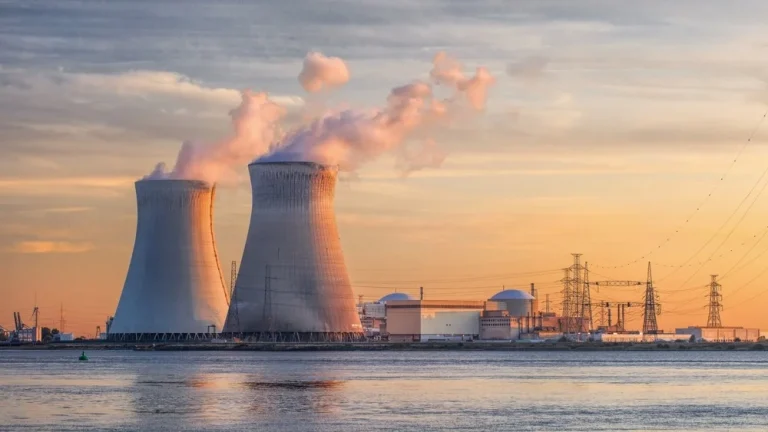
Our reminder of why nuclear power still remains a highly controversial topic, is happening right now in Zaporizhzhia, Ukraine. This is Ukraine’s largest nuclear power plant and right now it is under Russian occupation surrounded by intense ground combat. Due to fear of a meltdown catastrophe, it is in the process of being shut down. Despite this demonstration of nuclear risk, the war and its negative economic effects have persuaded several countries to keep nuclear power as part of their energy mix. The war in Ukraine is reviving global interest in nuclear power, since gas and oil shortages have reshaped energy markets and driven up fossil fuel prices. Countries like Japan, Germany, France, Britain and The United States are reconsidering their stance on nuclear power usage. Amidst the rising fossil fuel prices, leaders are considering building new nuclear power plants or delaying the closing of existing ones. Both Germany and Japan are under fire as both countries turned against nuclear power after the 2011 Fukushima meltdown. Despite Germany being against nuclear power until recent times, German policymakers are considering prolonging the life of three final nuclear power plants that had been scheduled to be shut down at the end of 2022. The reprieve would only be temporary. That means a year or two of using nuclear power to get through the current energy crisis — but it would still mark a significant policy reversal that has been a major focus of Germany political life since the 2010s. In late August, Japanese Prime Minister Fumio Kishida announced that the Japanese government is considering constructing new nuclear power plants with the goal of making them operational in the 2030s. The government may also extend the operational life of its current nuclear power plants. The prime minister also explained how he directed a government panel to look into how “next-generation nuclear reactors equipped with new safety mechanisms” can be used to help Japan achieve its goal of carbon neutrality by 2050. This council is expected to report back by the end of the year. Around 70% of French electricity is derived from nuclear power, and no other country produces more nuclear power. Today, nuclear energy earns the country more than €3 billion (US$3 billion) per year. Currently the nuclear energy industry in France is facing significant challenges. The 2022 summer heatwave has warmed the country’s rivers and lowered water levels, reducing the ability of its energy companies to use the water to cool nuclear reactors. This year France had to make half of the country’s nuclear reactors go offline. Many critics of current President Emmanuel Macron, accuse him of being inconsistent on nuclear policy as his views on nuclear power have shifted. He previously promised to reduce France’s reliance on nuclear energy, and in 2020 he managed to shut down a 42-year-old plant in Fessenheim. But in February this year, he shared his plans to build 6 new reactors (estimated cost of €50 billion). The first reactor should start operating by 2035.  The United States, that doesn’t rely as heavily on Russian gas and oil, does not face the same economic consequences from the war. But even in the US nuclear power is getting a second look due to high energy prices. The Diablo Canyon plant – the state’s largest single source of electricity – was planned to be shut down by 2025. The sudden proposal passed by the state legislature early September could keep it open 5 years longer. Additionally, the plant’s owner, Pacific Gas and Electric (PG&E) was given a $1.4 billion loan. “There’s no connection between building nuclear power plants and dealing with the price spike caused by the loss of Russian gas,” since they take at least a decade to construct, said Tom Burke, the chairman of E3G, a climate think tank from London. Due to current circumstances – the war, climate change and energy shortage, multiple countries are changing and reconsidering their stance on nuclear power. Could this possibly be the start to a new era of energy supply? While that remains uncertain, what is certain is that many countries will start resorting to nuclear power to make up for insignificant energy. While it might not be a huge shift, it is a slight change in how we perceive nuclear energy. Decisions made today regarding nuclear power could have economic and environmental consequences for the following decades.

, , ,

Countries Return to Nuclear Power With Uncertainty Read Post »
Can the Rise of Green Energy Cause Problems Between Countries in EU

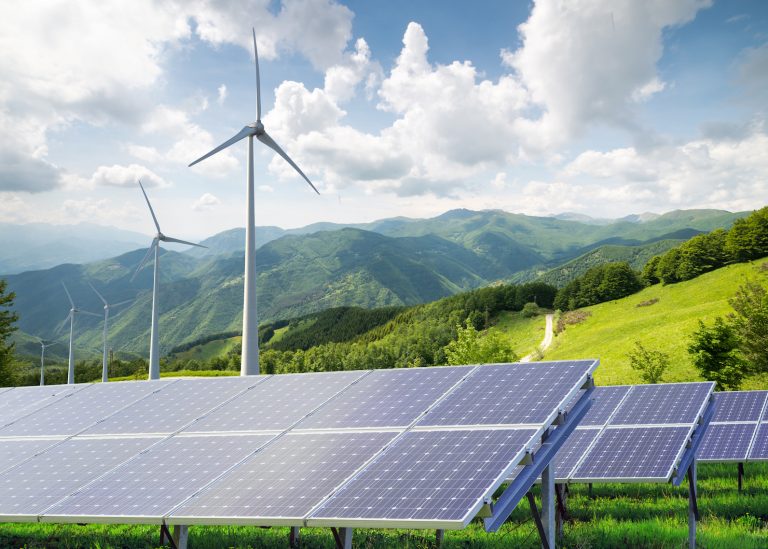
Millions of European families may experience blackouts or be unable to pay to stay warm this winter due to power shortages and sky-high natural gas costs. The European Union (EU) does, however, have specific options at its disposal to assist alleviate this crisis and avert future crises. The EU can and must diversify its fuel sources to ensure that affordable, clean energy is always available. The scarcity of natural gas, which accounted for 22% of power output in the EU in 2019, is the most urgent source of the energy crisis. The EU obtains natural gas directly from Russia via the Nord Stream pipeline, but Russia has reduced supply, driving up costs and raising fears of shortages. Russia believes the lower supply is due to a seasonal shift in which more natural gas is diverted into storage caverns in preparation for increased domestic demand during the winter. The interruption in supplies, on the other hand, coincides with the completion of the Nord Stream 2 pipeline and Russia’s efforts to pressure the EU Commission into supporting the project’s ultimate approval. Because Russia is plainly not a trusted partner, EU member states must take steps to diversify their natural gas sources. Despite the fact that liquefied natural gas (LNG) is more expensive than natural gas delivered by pipeline, member states should seek LNG from the United States and the Middle East to diversify their natural gas supplies. This will help avoid the need to rely on higher-carbon-emitting energy sources like coal and oil to keep the lights turned on. For the past two decades, the EU has been attempting to make a big transition to renewable energy sources, but with limited success. Wind and solar power accounted for less than 20% of EU electricity in 2020, while hydropower accounted for only 13%. Though the percentages are increasing, there is just not enough renewable energy in the bloc at the moment, and when it is available, it is unreliable. Solar power goes out at night, and wind power goes out when the wind dies. Renewables have a significant role to play in the energy environment, but they must be adopted with a realistic understanding of the technology’ current capabilities. Renewable energy generation should be increased in the EU, but not as a substitute for stable, reliable clean energy sources.

, , , , ,

Can the Rise of Green Energy Cause Problems Between Countries in EU Read Post »

Green energy in EU-China relations

Renewable energy has geopolitical consequences that go beyond the immediate impact on energy and commodity markets. Individual countries’ energy strategies have a variety of economic and political ramifications. This article examines the importance of renewable energy in EU-China relations, as two of the world’s largest renewable energy producers. Both countries’ individual objectives for decarbonization of their domestic energy systems have lately risen, and renewables are playing an increasingly crucial role in shaping their bilateral relations. As a result, we wonder what impact renewable energy has on the connection between the two parties. We use the concept of policy interdependence to capture the effect in four sectors relevant to renewable energy: climate, energy, industry, and trade and investment policy. While these are frequently thought of as independent fields, they are all connected by renewable energy. Renewable energy has the potential to be a factor of bilateral ties, according to the findings. In the past, renewable energy helped the EU and China align more closely, but today’s increased reliance on policy choices based on national goals raises barriers to further cooperation. However, the patterns of policy interdependence shown in this study point to the possibility of renewed cooperation in the sphere of energy policy, assuming policymakers’ ability to see beyond the current structure of bilateral ties. The case of renewable energy in EU-China ties demonstrates that renewables are becoming an increasingly important and powerful influencer of bilateral relations’ nature. Because of the technological differences between renewables and fossil fuels, many classic geopolitical factors may not apply in RE geopolitics. However, policy interdependence between the EU and China in the sphere of renewable energy demonstrates that renewables co-determine bilateral interactions beyond the immediate energy and material flows between individual countries. As the instance of the EU and China demonstrates, RE policies interact, resulting in more alignment and proximity on the one hand, as well as increased competitiveness and frictions on the other. As a result, the advancement of RE has the potential to “de-geopolitize” international relations, allowing states to move beyond “zero-sum” thinking in their pursuit of energy security. However, RE is not immune to worldwide competition, as seen by the growing struggle over the establishment of industrial standards in RE, as well as trade and investment.

, , , ,

Green energy in EU-China relations Read Post »

Global Decline in Nuclear Power Demand Amid Pandemic

The number of nuclear plants operating globally is at a 30 year low. New nuclear plants struggle for investment thus development and upkeep. Proponents of nuclear power say that, as a low-carbon power source, it can be of utmost importance in helping countries meet their climate goals, but several plants around the world are meeting their end and many new ones are facing delays. Of the 52 new plants being built globally at least 33 are behind schedule, while not a single new project came online in the first half of 2020. This year nuclear plant operators have suffered the consequences by the COVID-19 pandemic with lockdowns causing low electricity demand and reducing power prices significantly. Nuclear power was not able to avoid the impacts of the pandemic, though in most cases reactors have continued to produce electricity. Global nuclear power generation went down by about 3% in the first quarter of 2020, caused by lower electricity demand. In the first quarter of 2020, most of the reductions in nuclear power were caused by lower electricity demand, alongside planned permanent closures of nuclear facilities. Electricity consumption in certain regions is not likely to reach pre-pandemic levels for many months. The European Union had the largest reduction in the first quarter of 2020. Lower demand led to nuclear output reductions in several countries, France being the most notable, where nuclear power generation went down by 10%. Multiple reactors were taken offline as demand fell. Shutdown of nuclear power plants also led to reductions. Nuclear power has also been an important source of power in France, Germany, Belgium, the Slovak Republic and Sweden. In Germany output fell by 17%, as steps are taken towards a complete nuclear power phase out by the end of 2022. In the United States, nuclear output went down by 2%. Low electricity cost and demand have continued throughout 2020. The lockdown has also impacted nuclear power construction activity and slowed it down by a significant amount. The completion of numerous projects is likely to be pushed by a few months to 2021, which includes two reactors in China and one in Finland. Other construction delays are likely to happen in France, the UK and the US. Nuclear power is not a preferred source of electricity as of currently, and it seems that not many countries will implement nuclear power on a higher scale any time soon. 

, , ,

Global Decline in Nuclear Power Demand Amid Pandemic Read Post »

Scroll to Top