Germany Implements New Measures to Ease Energy Crisis

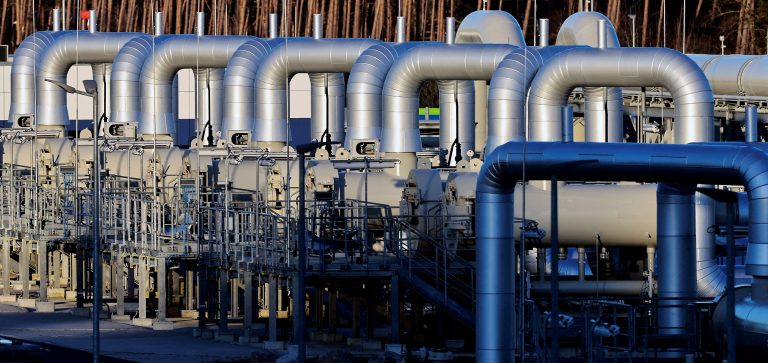
Since the outbreak of the Russia-Ukraine war earlier in 2022, European countries have struggled to enforce new emergency measures that will protect households and businesses from high energy prices. With no access to cheap Russian natural gas, Germany has found itself in a crisis. In 2020 Germany got 55% of its gas import from Russia, and with the sanctions in place right now, the country is experiencing a major struggle. Russian energy leader Gazprom tightened the geopolitical screws on Germany, and the rest of the EU, this September with the announcement that its Nord Stream 1 pipeline would be shut down indefinitely. Gazprom’s latest move places Germany in pitfall as a freezing and uncertain winter approaches. Recently German officials celebrated the news that natural gas storage facilities have been filled to 80% of full capacity, but that only provides little comfort and security to the mass population. Currently Germany has little natural gas production, and relies almost completely on imports of natural gas to meet current demand and Russia is its largest single source. Germany’s effort to uplift its wind industry began to fail even before 2022. Ever since then the German government has been clawing its way to source additional imports to satisfy consumer and industrial needs, and that effort intensified into desperation after the Russia-Ukraine war and its sanctions. German prices for gasoline and public transport have surged on September 1st, as government subsidies expired. The price for natural gas, which is used by around 50% of households for heating, and for electricity has skyrocketed. The government is trying to encourage consumers and businesses to save energy in any way they can to prevent a shortage during the following winter months. The Energy Saving Ordinance came into force earlier this month. These are the measures Germany is taking: Economy Minister Robert Habeck from the environmentalist Green Party says he expects the measures to reduce gas consumption “by around two, two and a half percent” and calls it a “small but indispensable contribution.”

, , ,

Germany Implements New Measures to Ease Energy Crisis Read Post »

Why are Multionational Firms Eager to Buy Green Power in China

China`s nascent green electricity trading scheme has attracted keen interest from multinational companies seeking to offset their carbon footprints in the country. But supply has been limited in a partially reformed market that is still heavily reliant on state guided power distribution. Also making it challenging for buyers and sellers to agree to deals especially long term ones is volatile global energy supply and prices amid heightened geopolitical uncertainties sparked by Russia`s invasion of Ukraine. Green power demand is strong in China as more companies hear that green power purchase agreements are now possible and available, said David Fishman, a Shanghai based senior manager at energy consultancy The Lantau Group, which helps large power users secure green energy supply. The prices and volumes of bilateral deals done through the scheme administered by the staterun green power exchanges in Guangzhou and Beijing are not made public. In the past 12 months, German chemicals giant BASF has clinched three power agreements under the scheme for its US$10 billion wholly owned petrochemical complex in Zhanjiang, western Guangdong province. These are key for BASF to achieve its plan for the facilities to be completely powered by green energy. Plants at the site, its third largest production base globally, will gradually come on line between late this year and 2030. The deals will also help the company reach its ambition to become carbon neutral by 2050, and contribute toward China`s goals of peak emissions by 2030 and carbon neutrality by 2060. A deal with China Resources Power a year ago was billed by BASF as a landmark initiative to open up a new green energy business model, as it was the first company to buy renewable energy under the scheme. It was followed by a 25 year framework agreement in March with State Power Investment Corp for the supply of onshore wind and solar power, and a 25 year supply contract last month with Brookfield Renewable. The Canadian firm, part of Brookfield Asset Management, will build dedicated solar and wind farms as well as energy storage facilities to support BASF`s Zhanjiang complex. It was an unprecedented longterm, fixed price deal in China that allows the consumer to decarbonise in a measurable, auditable and reportable manner, said Daniel Cheng, Brookfield`s renewable power and transition managing director. Brookfield entered China`s renewable energy market in 2017 with the acquisition of 168 megawatts of generating assets. Its China asset portfolio has since grown to 4,200MW. Still, many green power project owners have elected to sell their output to the state owned grid operators, instead of going to the trouble and cost of registering in the open markets under the scheme, Fishman said. Public market prices are high, but extra work isn’t worth the extra work  for many generators, he added, adding that it doesn’t need to be sold in the open market until 2030. In March, BASF rival Covestro’s Chinese boss Holly Ray Fanli said  the company wanted to buy more green electricity through long-term contracts, but its supply was limited. We were able to purchase a premium enough to meet 10% of the annual demand at our Shanghai plant, the world’s largest manufacturing facility. According to Fishman, long-term bilateral green power trading pricing is currently priced given the rising costs of solar systems due to material shortages and rising fossil fuel prices during the Ukrainian War. extremely difficult.

, , ,

Why are Multionational Firms Eager to Buy Green Power in China Read Post »

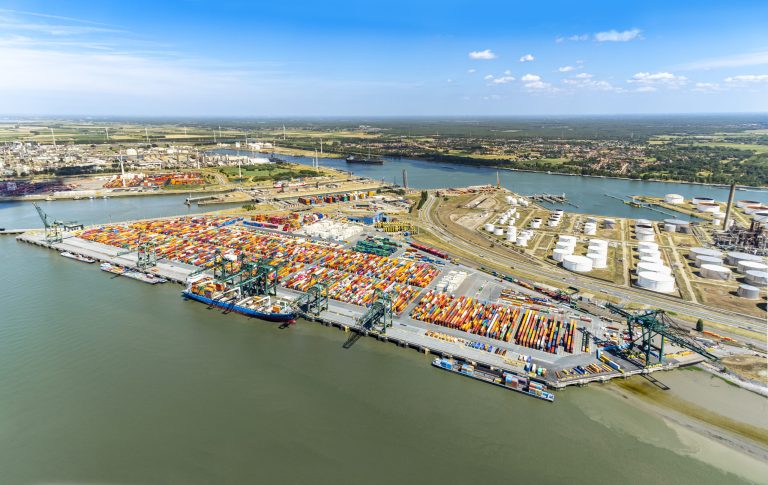
Large-scale green hydrogen plant at Port of Antwerp-Bruges

Plug has signed a 30-year concession agreement to build a facility in Europe’s second largest Belgian port. The company plans to build a 100 MW green hydrogen facility with its own electrolytic cell and liquefaction technology. As part of the agreement, 28 hectares of land were leased. Therefore, the plug produces up to 12,500 tonnes  of liquid and gaseous green hydrogen annually for the European market. Construction of the facility will begin at the end of 2023 after the permit process is completed. The first production of green hydrogen is expected to start at the end of 2024 and the plant is expected to go into operation in 2025. As Europe tackles climate change and energy security challenges, an agreement with the Port of Antwerp Bruges will provide the local market with the long-awaited locally produced green hydrogen, said Andy Marsh, CEO of Plug. The European energy crisis due to geopolitical risks has accelerated the demand for green hydrogen development projects.  Flanders Prime Minister Jan Jumbon said: Hydrogen plays an important role in  energy conversion and at the same time provides Flanders with many economic and social opportunities. With the strategic location of the port and the know-how of  companies, research centers and educational institutions, there are all the prerequisites for becoming a hydrogen hub in Western Europe. The port of Antwerp Bruges is strategically located in Europe. Located in the heart of the largest chemical industry cluster, close to the North Sea, it offers transportation connections to Germany, Belgium, the Netherlands, the United Kingdom and France.  This should make this port an important hydrogen hub for Europe. Through its new green hydrogen facility, Plug aims to play an important role in helping ports achieve this goal. The location of the site  provides the opportunity for rapid on-site power supply of wind turbines near the site, and the power connection point is less than a mile away. In addition, the site provides customers with access to water, roads, railroads and pipelines to supply green hydrogen. A freely accessible hydrogen pipeline will be built along the site. Plug has signed a contract with Fluxys and conducted a feasibility study to enable connectivity to the pipeline. The pipeline will be part of Europe’s open access hydrogen backbone. The plug will be built in the  NextGen  area of ​​the port, a business-only area that supports the circular economy. The announcement of this project demonstrates the strength of transatlantic collaboration between international technology companies and  European port operators.

, , , ,

Large-scale green hydrogen plant at Port of Antwerp-Bruges Read Post »

Can the Rise of Green Energy Cause Problems Between Countries in EU

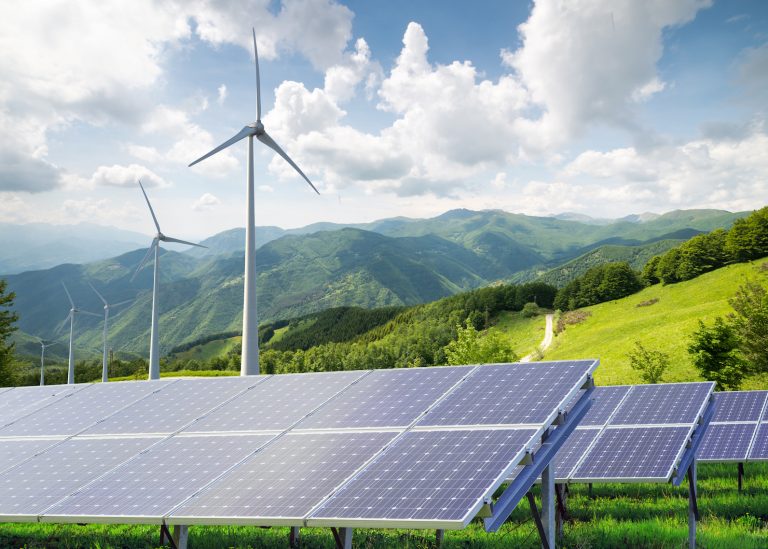
Millions of European families may experience blackouts or be unable to pay to stay warm this winter due to power shortages and sky-high natural gas costs. The European Union (EU) does, however, have specific options at its disposal to assist alleviate this crisis and avert future crises. The EU can and must diversify its fuel sources to ensure that affordable, clean energy is always available. The scarcity of natural gas, which accounted for 22% of power output in the EU in 2019, is the most urgent source of the energy crisis. The EU obtains natural gas directly from Russia via the Nord Stream pipeline, but Russia has reduced supply, driving up costs and raising fears of shortages. Russia believes the lower supply is due to a seasonal shift in which more natural gas is diverted into storage caverns in preparation for increased domestic demand during the winter. The interruption in supplies, on the other hand, coincides with the completion of the Nord Stream 2 pipeline and Russia’s efforts to pressure the EU Commission into supporting the project’s ultimate approval. Because Russia is plainly not a trusted partner, EU member states must take steps to diversify their natural gas sources. Despite the fact that liquefied natural gas (LNG) is more expensive than natural gas delivered by pipeline, member states should seek LNG from the United States and the Middle East to diversify their natural gas supplies. This will help avoid the need to rely on higher-carbon-emitting energy sources like coal and oil to keep the lights turned on. For the past two decades, the EU has been attempting to make a big transition to renewable energy sources, but with limited success. Wind and solar power accounted for less than 20% of EU electricity in 2020, while hydropower accounted for only 13%. Though the percentages are increasing, there is just not enough renewable energy in the bloc at the moment, and when it is available, it is unreliable. Solar power goes out at night, and wind power goes out when the wind dies. Renewables have a significant role to play in the energy environment, but they must be adopted with a realistic understanding of the technology’ current capabilities. Renewable energy generation should be increased in the EU, but not as a substitute for stable, reliable clean energy sources.

, , , , ,

Can the Rise of Green Energy Cause Problems Between Countries in EU Read Post »

Green energy in EU-China relations

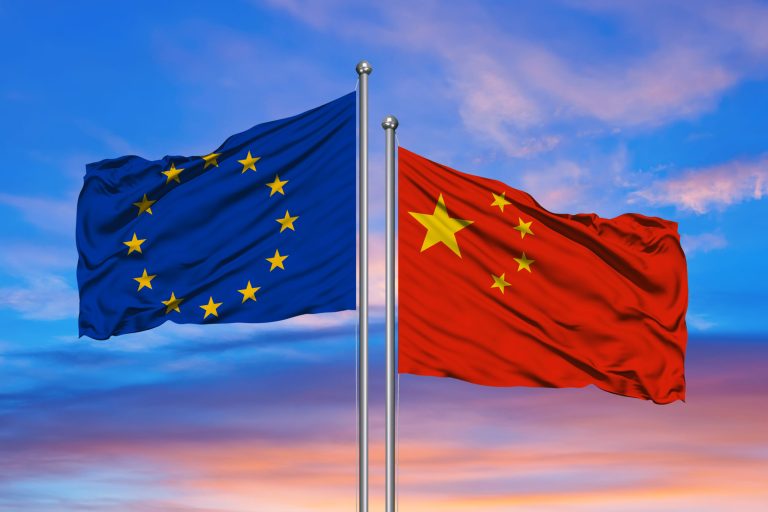
Renewable energy has geopolitical consequences that go beyond the immediate impact on energy and commodity markets. Individual countries’ energy strategies have a variety of economic and political ramifications. This article examines the importance of renewable energy in EU-China relations, as two of the world’s largest renewable energy producers. Both countries’ individual objectives for decarbonization of their domestic energy systems have lately risen, and renewables are playing an increasingly crucial role in shaping their bilateral relations. As a result, we wonder what impact renewable energy has on the connection between the two parties. We use the concept of policy interdependence to capture the effect in four sectors relevant to renewable energy: climate, energy, industry, and trade and investment policy. While these are frequently thought of as independent fields, they are all connected by renewable energy. Renewable energy has the potential to be a factor of bilateral ties, according to the findings. In the past, renewable energy helped the EU and China align more closely, but today’s increased reliance on policy choices based on national goals raises barriers to further cooperation. However, the patterns of policy interdependence shown in this study point to the possibility of renewed cooperation in the sphere of energy policy, assuming policymakers’ ability to see beyond the current structure of bilateral ties. The case of renewable energy in EU-China ties demonstrates that renewables are becoming an increasingly important and powerful influencer of bilateral relations’ nature. Because of the technological differences between renewables and fossil fuels, many classic geopolitical factors may not apply in RE geopolitics. However, policy interdependence between the EU and China in the sphere of renewable energy demonstrates that renewables co-determine bilateral interactions beyond the immediate energy and material flows between individual countries. As the instance of the EU and China demonstrates, RE policies interact, resulting in more alignment and proximity on the one hand, as well as increased competitiveness and frictions on the other. As a result, the advancement of RE has the potential to “de-geopolitize” international relations, allowing states to move beyond “zero-sum” thinking in their pursuit of energy security. However, RE is not immune to worldwide competition, as seen by the growing struggle over the establishment of industrial standards in RE, as well as trade and investment.

, , , ,

Green energy in EU-China relations Read Post »

Scroll to Top